

Medically reviewed by Dr. Michael Beke, DMD, FAGD on September 28, 2026
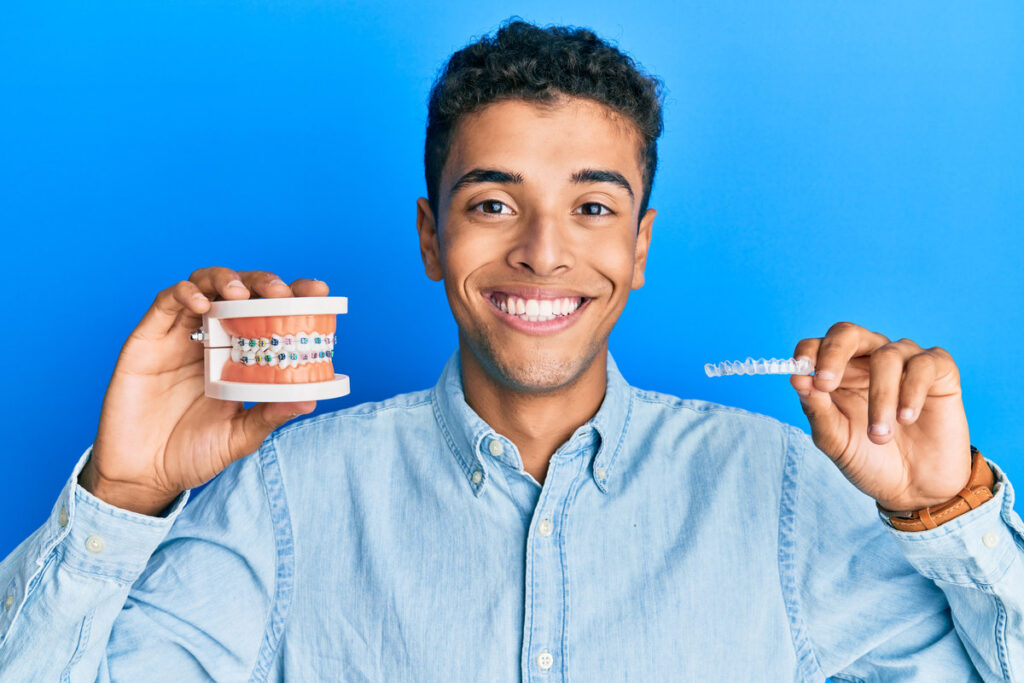
For most adults with mild to moderate crowding, spacing, or bite issues, Invisalign and traditional braces can both produce excellent results, so the better choice usually comes down to case complexity and lifestyle. Invisalign is nearly invisible and removable but depends on you wearing aligners 20 to 22 hours a day. Braces stay on around the clock and give more control over complex tooth movements, but they are more visible and harder to clean around.
At Lifetime Smiles, Dr. Michael Beke and our team take an evidence-based approach to every treatment recommendation, including orthodontics. Dr. Beke completed his Invisalign certification in 2020, and he holds a Fellowship with the Academy of General Dentistry. We take the time to explain honestly whether clear aligners are a good fit for your specific situation. If you are also curious about everything else we can do to help you love your smile, our cosmetic dentistry in Bellevue services offer a wide range of options to get you there.
Appearance and Lifestyle Fit
For many adults, the first question about orthodontics is a simple one: will people be able to tell? Traditional braces use metal or ceramic brackets bonded to the teeth and connected by wires, which are effective but visible. Invisalign uses a series of clear, custom-made plastic trays that fit snugly over the teeth and are nearly invisible in everyday settings. This makes Invisalign a popular choice among working professionals and adults who prefer to keep their treatment low-key.
Beyond appearance, removability is a lifestyle perk that fixed braces cannot match. You can take aligners out for meals, which means no food restrictions and no threading floss around brackets and wires. That flexibility comes with real responsibility, since aligners need to be worn 20 to 22 hours per day to stay on schedule. If consistent wear feels like it could be a challenge, braces take that variable off the table by working around the clock without any effort on your part.
Treatment Effectiveness and Case Complexity
When it comes to results, both options can do a wonderful job of straightening teeth, but they each have strengths worth knowing about before you decide.
What Invisalign Does Well
Invisalign has advanced significantly over the years and can now treat a broad range of alignment issues, including mild to moderate crowding, spacing, overbite, and underbite. For adults with relatively straightforward cases, clear aligners can achieve results comparable to traditional braces. Published research highlights Invisalign as a more discreet option for adults with mild to moderate malocclusion, while also noting its limitations for more complex bite issues.
Where Traditional Braces Have the Edge
Traditional braces give the provider more precise control over tooth movement, particularly in cases involving significant rotation, vertical shifts, or complex bite correction. Because brackets and wires apply continuous, multidirectional force, they tend to be the better fit for severe crowding, large gaps, or more intricate alignment challenges. If your case falls into this territory, braces may deliver more predictable results.
Invisalign vs. Braces at a Glance
Here is a quick look at how the two options compare across some of the most common considerations for adults:
| Consideration | Invisalign | Traditional Braces |
|---|---|---|
| Visibility | Nearly invisible clear trays | Visible brackets and wires |
| Removability | Removed for eating and cleaning | Fixed throughout treatment |
| Case range | Best for mild to moderate cases | Mild to severe cases |
| Oral hygiene | Brush and floss normally | Requires a more detailed cleaning routine |
| Compliance | Depends on 20 to 22 hours of daily wear | No daily compliance effort |
| Food restrictions | None while aligners are out | Avoid hard, sticky, and chewy foods |
Considerations Unique to Adult Patients
Adults bring a different starting point to orthodontic treatment than teenagers do. Existing crowns, bridges, implants, and large fillings can affect how teeth move and how aligner attachments or brackets bond, so we map out any dental work before recommending a plan. Implants do not move at all, which means the plan has to work around them.
Gum and bone health matter even more in adulthood. Moving teeth through inflamed gums or weakened bone can worsen recession, so we address any gum concerns first. Adults also tend to care about how treatment fits into work, travel, and social life, which is one reason many choose aligners. Whichever option you choose, keeping teeth clean during treatment helps prevent the chalky marks some people notice afterward, a topic our article on white spot causes and treatment covers in depth.
Cost and Treatment Timeline
Cost is a practical consideration, and both options often fall within a similar price range, though the specifics depend on case complexity and treatment duration. Some dental insurance plans that include adult orthodontic benefits may cover a portion of either treatment, and if you have benefits left this year, our guide to using year-end dental insurance benefits explains how to plan around them. Flexible financing options like CareCredit also make treatment more accessible for most budgets.
How long treatment takes depends far more on the complexity of your case than on the type of appliance. Milder cases with Invisalign may wrap up in as few as 6 to 12 months, while more involved cases with traditional braces can extend to 18 to 30 months. The most accurate timeline will always come from a clinical evaluation with your dentist.
What to Expect With Invisalign at Lifetime Smiles
If Invisalign in Bellevue looks like a good fit, treatment follows a clear sequence. We start with an exam and digital records so Dr. Beke can evaluate your bite, gums, and any existing dental work. From there, a custom series of aligners is planned, and you switch to a new set on a regular schedule while we check your progress along the way.
Once your teeth reach their new positions, retainers protect the result, since teeth naturally tend to drift back over time. If your case would be better served by fixed braces, we will tell you so directly and talk through your next steps, because recommending the right treatment matters more to us than recommending a particular one.
Finishing Touches After Orthodontic Treatment
Whichever path you choose, a straighter smile is well within reach, and for many adults, orthodontic treatment is just one piece of a bigger picture. Once your teeth are aligned, small cosmetic refinements often look better and require less tooth preparation. Common finishing options include:
- Teeth whitening: Brightens your newly aligned smile once aligners or brackets are finished.
- Composite bonding: Reshapes chipped or uneven edges that are easier to see once teeth are straight.
- Porcelain veneers: Cover worn or discolored front teeth for a longer-lasting cosmetic change.
Patients with several concerns often combine these into a smile makeover, with orthodontic treatment as the foundation.
Find the Right Orthodontic Option at Lifetime Smiles
The best way to figure out which orthodontic option is right for you is a thorough, no-pressure consultation with a dentist who takes the time to look at the full picture. Dr. Michael Beke brings a depth of clinical experience, a commitment to evidence-based care, and a genuine interest in helping patients feel confident in their decisions. From his Fellowship with the Academy of General Dentistry to his service as a dentist with the 82nd Airborne Division, Dr. Beke’s training shows in the care he provides every day.
Whether you are leaning toward Invisalign or want to understand whether traditional braces may serve you better, our team is here to walk you through every option with clarity and warmth. We are in network with Delta Dental, Premera, and Regence, and offer financing through CareCredit, so cost should never stand between you and a smile you love. Contact our office today to schedule your consultation and take that first step toward a straighter, more confident smile.
Frequently Asked Questions About Invisalign and Braces for Adults
Am I too old for Invisalign or braces?
There is no upper age limit for straightening teeth. What matters most is that your gums and the bone supporting your teeth are healthy. Adult tooth movement can take somewhat longer, and existing crowns or implants need to be planned around, but many adults achieve excellent results.
Is Invisalign as effective as braces for adults?
For mild to moderate crowding, spacing, and many bite issues, clear aligners can achieve results comparable to braces when they are worn as directed. For severe rotations, large vertical movements, or complex bite correction, braces often give more precise control. An exam shows which category your case falls into.
Does Invisalign hurt less than braces?
Both cause some pressure and soreness as teeth move, usually for a day or two after a new aligner or adjustment. Many adults find aligners more comfortable day to day because there are no brackets or wires to rub against the cheeks and lips.
Can I get Invisalign if I have crowns or dental implants?
Often, yes. Crowns and bridges can usually be included in a treatment plan, though attachments may bond differently to them. Dental implants cannot be moved, so the plan works around them. Your dentist reviews all existing dental work before treatment begins.
Will I need a retainer after treatment?
Yes. After either Invisalign or braces, teeth naturally tend to shift back toward their original positions. Wearing a retainer as directed is the most reliable way to protect your results over the long term.
About the Author
Dentist, Lifetime Smiles Bellevue | Fellow, Academy of General Dentistry
Dr. Michael Beke leads the team at Lifetime Smiles in Bellevue, Washington. He is a Fellow of the Academy of General Dentistry, a distinction that requires at least 500 hours of approved continuing education and a comprehensive exam, and he previously served as a dentist with the U.S. Army’s 82nd Airborne Division. His advanced training includes dental implantology, Digital Smile Design, Invisalign, soft tissue laser dentistry, and oral conscious sedation.