

Medically reviewed by Dr. Michael Beke, DMD, FAGD on September 25, 2026
The main difference between dental veneers and dental bonding is how the new tooth surface is made. Porcelain veneers are thin ceramic shells fabricated in a dental lab and permanently bonded to the front of a tooth after a small amount of enamel is removed, while composite bonding is tooth-colored resin sculpted directly onto the tooth in a single visit, usually with little or no enamel removal. That one difference drives everything else: how long each lasts, how it resists stains, how it is repaired, and what it costs over time. The better choice depends less on which treatment is “best” and more on the specific problem you want to fix.
At Lifetime Smiles Bellevue, we guide patients through exactly these kinds of decisions every day. As part of our cosmetic dentistry offerings, both porcelain veneers and composite bonding are available, and Dr. Michael Beke takes the time to explain each option thoroughly so you can move forward with confidence. This guide is built around real-world situations, such as a single chipped tooth, a gap, or stains that whitening will not lift, so you can see which treatment tends to fit your circumstances before your consultation.
Veneers vs. Bonding at a Glance
Before getting into specific situations, it helps to see the two treatments side by side. The table below summarizes the practical differences most patients ask about during a cosmetic visit.
| Factor | Composite Bonding | Porcelain Veneers |
|---|---|---|
| Material | Tooth-colored composite resin | Lab-crafted dental ceramic |
| Typical visits | One | Usually two |
| Enamel removal | Little to none | A thin layer, so the change is permanent |
| Stain resistance | Moderate; resin can pick up stains | High; porcelain is non-porous |
| If it chips | Often patched chairside | Usually replaced |
| Upfront cost | Lower | Higher |
| Best suited to | Small, isolated fixes on one or two teeth | Larger changes in color and shape across several teeth |
How Porcelain Veneers Work
Porcelain veneers are thin, custom-crafted shells of dental ceramic that are permanently bonded to the front surfaces of your teeth. They are fabricated in a dental laboratory to precise specifications, which means the process typically involves two visits: one to prepare the teeth and take impressions, and a second to bond the finished veneers in place. Because veneers are made from ceramic, they resist staining exceptionally well and can last well over a decade with proper care. According to research published in the National Institutes of Health’s PubMed Central, porcelain veneers show excellent aesthetic results and predictable longevity, making them one of the most reliable cosmetic restoration options available.
How Composite Bonding Works
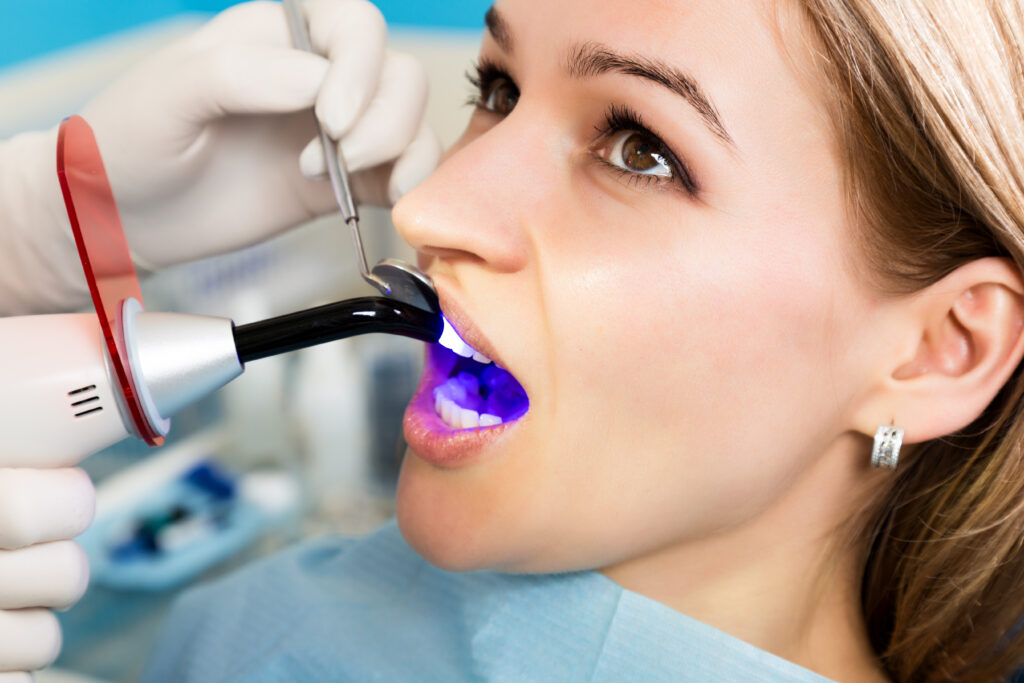
Composite bonding involves applying a tooth-colored resin material directly to the surface of a tooth, shaping it by hand, and hardening it with a curing light. Because the resin is sculpted chairside, Dr. Beke has precise control over the final shape and shade, allowing for natural-looking results that blend with surrounding teeth. Since bonding usually does not require enamel removal, it is considered a reversible treatment, but composite resin is more susceptible to staining than porcelain and needs touch-ups or replacement sooner.
Which Option Fits Your Situation?
Most people do not start by asking about materials. They start with a specific thing they want to change. The cards below match the most common cosmetic concerns with the option that tends to fit best, keeping in mind that an exam is what ultimately confirms the right plan for your teeth.
Often bonding
One Small Chip on a Front Tooth
A small chip is a classic bonding case. The repair is sculpted and matched in one visit, and no healthy enamel needs to be removed to fix a single edge.
Depends on the cause
A Gap Between Front Teeth
Bonding can close a modest gap. Veneers fit better when you also want to change tooth shape or color, and orthodontics may be the right first step when the gap comes from tooth position.
Often veneers
Deep Stains Whitening Will Not Lift
Intrinsic discoloration across several teeth is usually better covered by porcelain, which holds its shade. Isolated spots may respond to bonding or targeted white spot treatment.
Protect first
Short or Worn Teeth From Grinding
Both resin and porcelain can chip under heavy grinding. The first step is usually controlling the habit, then choosing veneers, bonding, or crowns based on how much structure has been lost.
Often veneers
Several Teeth You Want to Reshape
When the goal is a uniform shape and shade across the smile, porcelain veneers give the most consistent and long-lasting result. Composite veneers are a lower-cost middle ground.
Often bonding
You Want to Try a Change First
If you are not ready for a permanent change, bonding lets you see a new shape without committing your enamel. Many patients revisit veneers later once they know what they like.
If your main concern is a bright white or chalky patch rather than a chip or shape issue, our white spot removal treatment may address it more conservatively than either option. And if you grind or clench at night, a custom nightguard is worth discussing before any cosmetic work, since it helps protect whichever material you choose.
When Neither Veneers nor Bonding Is the Right Answer
Veneers and bonding are cosmetic surface treatments. They work best on teeth that are healthy and structurally sound, and they are not always the right tool. Part of a good consultation is ruling out situations where a different treatment would serve you better.
A Tooth With a Large Filling, Crack, or Decay
When a tooth has lost significant structure, covering only the front surface does not protect what remains. A dental crown covers the entire tooth, restoring strength as well as appearance. Our article on whether dental crowns can improve the appearance of misshapen or discolored teeth explains when a crown becomes the better cosmetic choice.
Crowding or Rotated Teeth
Veneers can disguise mild unevenness, but they do not move teeth. When crowding, rotation, or bite problems are the real issue, clear aligner therapy such as Invisalign can straighten the teeth themselves, often reducing or eliminating the need for cosmetic coverage afterward. Some patients choose aligners first, then add bonding or veneers for final shape refinements.
How Each Option Ages Over Time
Both treatments look excellent on day one. The difference shows up over the following years, which is why longevity and maintenance matter as much as the initial result. According to the Cleveland Clinic’s overview of dental bonding, bonding typically lasts between three and 10 years before it needs to be touched up or replaced, depending on oral habits and how many teeth are treated. Porcelain, by contrast, is built for a longer service life.
Treatment Day
Bonding is shaped, cured, and polished in a single appointment. Veneers begin with tooth preparation and impressions, then are bonded at a second visit once the lab finishes them.
The First Few Years
Bonded surfaces benefit from polishing at routine cleanings and some care with coffee, tea, and red wine. Veneers need the same brushing and flossing as natural teeth and resist surface stains well.
Years Three to Ten
This is the window when bonding commonly needs a touch-up or replacement. Small chips or dull spots can often be repaired chairside without starting over.
Beyond a Decade
Well-maintained porcelain veneers are frequently still in service. When one does need attention, it is usually because of a fracture or changes in the surrounding gums, and it is typically replaced rather than patched.
The takeaway is that bonding trades a lower upfront commitment for more frequent maintenance, while veneers trade a larger upfront commitment for a longer, lower-maintenance lifespan. Neither is wrong; they suit different priorities.
What Affects the Cost of Veneers and Bonding
Bonding generally costs less per tooth upfront, and veneers cost more because of the lab fabrication and additional appointment. The number that matters most, though, is your total cost over time. A few factors shape it more than the price per tooth.
The number of teeth being treated has the biggest influence, since a single bonded chip and a full set of veneers are very different investments. Replacement cycles matter too: bonding that is redone several times over the life of one set of veneers can narrow the gap between the two. Preparatory care, such as whitening before treatment or addressing gum health first, also adds to the plan. Insurance coverage depends on your plan and on whether a treatment is restorative or purely cosmetic, so our team reviews your benefits with you, and our flexible financing options can help spread out the cost of a larger plan.
Pairing Veneers or Bonding With Other Treatments
It is also worth noting that neither treatment stands alone in the full picture of smile enhancement. Pairing either option with professional teeth whitening before bonding, or incorporating veneers into a broader smile makeover, can produce results that go well beyond what either procedure achieves on its own. Timing matters here: neither composite resin nor porcelain responds to whitening once placed, so whitening is usually done first and the restorations are matched to your new shade.
Related Reading
Already leaning toward one option? Our side-by-side guide to composite bonding vs. porcelain veneers goes deeper on candidacy and aftercare, and our article on whether composite veneers are a good alternative to porcelain veneers covers the resin-veneer middle ground.
Questions to Bring to Your Cosmetic Consultation
Walking into your appointment with a few focused questions makes it easier to compare options on your own terms. These are the ones that tend to clarify the decision fastest:
- Is my tooth structurally healthy enough for a surface treatment? This rules crowns or other restorative care in or out.
- How much enamel would veneers require on my teeth? The answer varies by tooth position and the change you want.
- Should I whiten or straighten first? Sequencing can change which option makes sense and how many teeth need treatment.
- What maintenance should I plan for over ten years? This helps you compare total commitment, not just the first visit.
Your answers to these questions, combined with an exam and your personal goals, usually point clearly toward one option or a combination of both.
Choose Lifetime Smiles Bellevue for Your Cosmetic Dentistry
At Lifetime Smiles Bellevue, we do not believe in one-size-fits-all smile solutions. Dr. Beke’s training, including his Academy of General Dentistry Fellowship and years of advanced study club participation, means every cosmetic recommendation is grounded in current clinical evidence and tailored to your individual goals. With over 35 years of history serving the Bellevue community, our practice is built on the belief that informed patients make better long-term decisions, and we take the time to walk through the pros, cons, and realistic outcomes of every treatment before a single step is taken.
Whether veneers or bonding is the right path for you, our team is ready to help you find out. We welcome patients from Bellevue and the surrounding Eastside Seattle communities to contact our office and schedule a cosmetic consultation today.
Frequently Asked Questions About Veneers and Bonding
Is bonding or a veneer better for a single chipped front tooth?
For a small chip on one tooth, bonding is often the simpler choice because it is completed in one visit and usually requires no enamel removal. A veneer may make more sense if the chip is large, the tooth is also discolored, or you want that tooth to match veneers on neighboring teeth.
Can I switch from bonding to veneers later?
Yes, in many cases. Because bonding typically leaves your natural enamel intact, the resin can be removed and the tooth prepared for a veneer when you are ready. Moving from veneers back to bonding is more limited, since veneer preparation permanently removes a thin layer of enamel.
Which option is better if I grind my teeth?
Grinding puts stress on both materials, and either one can chip under heavy force. Porcelain is harder and holds its shape well, while bonding is easier to repair chairside. Whichever you choose, a custom nightguard is usually recommended to protect your investment.
Can veneers or bonding fix crooked teeth?
They can make mildly uneven or slightly rotated teeth look straighter, but they do not move teeth. For noticeable crowding or bite issues, clear aligner treatment is often the better first step, with bonding or veneers used afterward for final shape refinements if needed.
How do I know if I need a crown instead of bonding or a veneer?
A crown is usually recommended when a tooth has a large filling, a significant crack, decay, or has had a root canal. Veneers and bonding cover only part of the tooth, so they work best on teeth that are structurally healthy. An exam and X-rays help determine which applies to you.
Does dental insurance cover veneers or bonding?
Coverage depends on your specific plan and on whether the treatment is considered restorative or purely cosmetic. Bonding used to repair damage is sometimes treated differently than bonding or veneers placed for appearance alone. Our team can review your benefits before treatment so there are no surprises.
About the Author
Dentist, Lifetime Smiles Bellevue
Dr. Michael Beke is a Fellow of the Academy of General Dentistry, a distinction that requires more than 500 hours of continuing education and a comprehensive exam. He has also served as a dentist with the U.S. Army’s 82nd Airborne Division. His advanced training includes Digital Smile Design, implant dentistry, and soft tissue laser dentistry, and his approach centers on evidence-based care and clear patient education.