

Medically reviewed by Dr. Michael Beke, DMD, FAGD on September 30, 2026
A mandibular advancement device (MAD) may be right for your sleep apnea if a physician has diagnosed you with mild to moderate obstructive sleep apnea, or if you have a more severe diagnosis and cannot tolerate CPAP. The device is a custom oral appliance that holds your lower jaw slightly forward during sleep to help keep your airway open. The decision starts with your physician, who confirms the diagnosis through a sleep study and determines whether oral appliance therapy fits your case. A dentist then evaluates your teeth and jaw, fabricates the appliance, and adjusts it over time.
At Lifetime Smiles Bellevue, our team fabricates custom-fit sleep apnea appliances alongside the general dentistry care we’ve provided the community for over three decades. We don’t diagnose or treat sleep apnea itself, but for patients whose physicians have already recommended oral appliance therapy, we craft the device that fits your mouth and supports your night’s rest. You can see how MADs fit alongside our sports guards and night guards on our custom mouthguards page.
Why Sleep Apnea Treatment Matters
If you snore loudly, wake up gasping for air, or feel exhausted despite a full night of rest, obstructive sleep apnea could be the reason. During sleep, the soft tissues at the back of the throat relax and partially or fully block the airway, which interrupts breathing again and again through the night. Untreated sleep apnea is linked to daytime fatigue, high blood pressure, and cardiovascular strain, so finding a treatment you’ll actually use matters.
Many people who receive a sleep apnea diagnosis are prescribed a CPAP machine, and CPAP remains the most common first treatment. Not everyone tolerates it well, though. Bulky masks, hoses, and pressurized air can make consistent nightly use difficult, and inconsistent use undermines the benefits of treatment. That is where a smaller, quieter alternative comes into the conversation.
What Is a Mandibular Advancement Device?
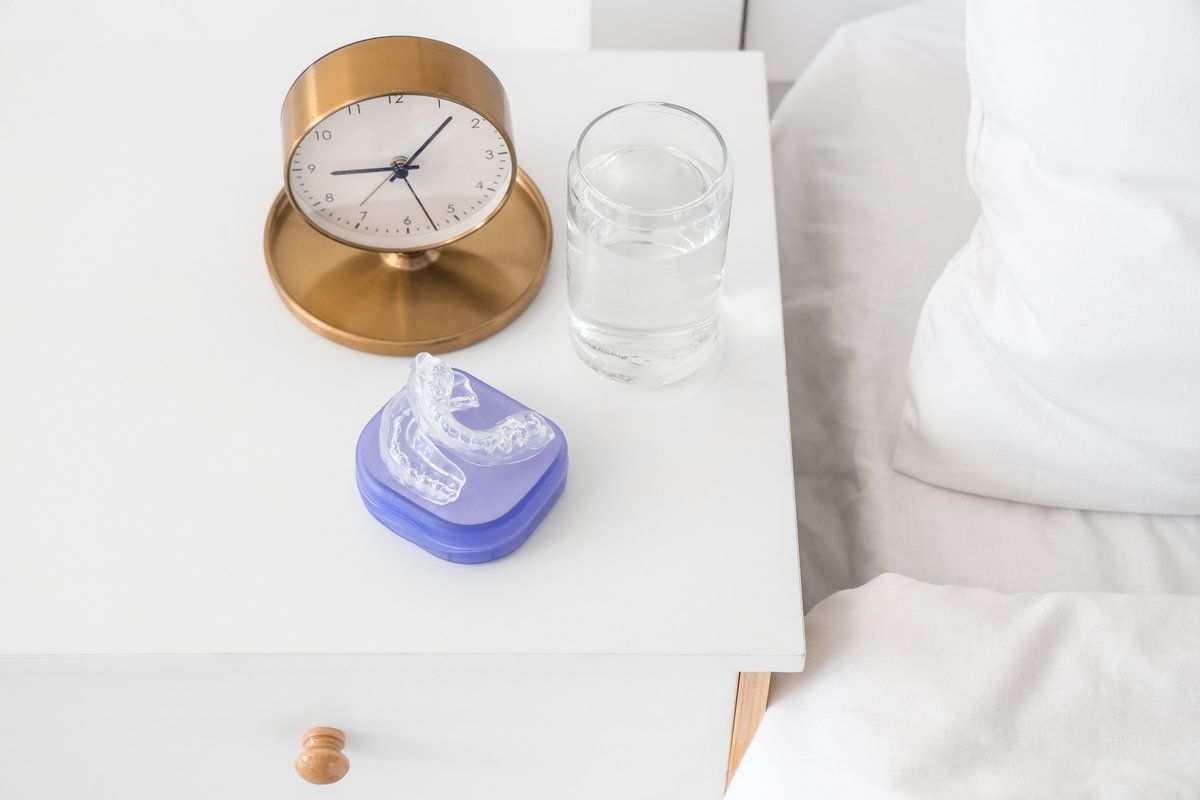
A MAD is a small, custom-molded appliance worn only during sleep. It looks similar to two connected mouthguards, with the upper and lower trays linked in a way that holds your lower jaw slightly forward. That subtle forward position widens the space at the back of your throat, reducing the tissue collapse that causes airway obstruction during sleep. Most devices are made of durable dental-grade materials and adjust in small increments so the fit can be dialed in over time.
According to the National Heart, Lung, and Blood Institute, oral appliances like mandibular repositioning mouthpieces are a recognized option for people who do not want to use or cannot tolerate CPAP therapy, and physicians may refer those patients to a dentist for a custom fit. Because the device is small, silent, and travel-friendly, many patients find they wear it more consistently than a CPAP machine. Consistent wear is a big part of what makes any sleep apnea appliance work over the long term. Some patients also report fewer complaints from a partner about snoring, which improves the quality of both people’s sleep.
Not the Same as a Night Guard or Store-Bought Snore Guard
A night guard for grinding simply cushions the teeth and does not move the jaw, so it does nothing for the airway. Over-the-counter “boil and bite” snoring devices do reposition the jaw, but they are not fitted to your bite, cannot be adjusted precisely, and are not designed for diagnosed sleep apnea. A custom MAD is built from impressions of your teeth and fine-tuned under dental supervision, which protects your teeth and jaw joints while the appliance does its work.
MAD vs. CPAP: How the Two Compare
CPAP and oral appliances work in different ways, and each has tradeoffs worth discussing with your physician. CPAP generally reduces breathing interruptions more completely, while an oral appliance is often easier to wear every night. The table below summarizes the practical differences.
| Factor | Mandibular Advancement Device | CPAP Machine |
|---|---|---|
| How It Works | Holds the lower jaw forward to widen the airway | Pushes pressurized air through a mask to keep the airway open |
| Typically Suited For | Mild to moderate OSA, or CPAP intolerance | All severity levels, especially severe OSA |
| Noise and Equipment | Silent, no power, no hoses | Machine, mask, tubing, and power source |
| Travel | Fits in a small case | Requires packing the unit and supplies |
| Who Manages It | Physician diagnoses and confirms results; dentist fits and adjusts | Physician and equipment supplier |
Some patients use both, relying on CPAP at home and an oral appliance for travel or camping. Your physician decides which approach fits your diagnosis, and we support that plan on the dental side.
Who Makes a Good Candidate for a MAD?
Not every case of sleep apnea calls for an oral appliance, so your physician’s guidance matters most. In general, a MAD tends to work well for people who share a few common traits, including:
- Mild to Moderate OSA: A confirmed diagnosis of mild or moderate obstructive sleep apnea from a sleep physician
- CPAP Intolerance: An inability or unwillingness to continue with CPAP therapy
- Healthy Teeth and Gums: Enough sound tooth structure to anchor the device comfortably
- Stable Jaw Joints: No untreated TMJ pain, severe bruxism, or unstable bite
Once your physician has diagnosed sleep apnea and referred you for oral appliance therapy, our team can review your smile and confirm whether a MAD will seat properly and stay comfortable through the night. Any active decay, loose fillings, or gum issues get addressed first so the appliance has a stable foundation, which is one more reason regular dental exams and cleanings matter before and during treatment.
What to Expect During Your MAD Fitting
The process starts with a thorough oral exam and a set of digital impressions. We look at how your teeth fit together, the health of your gums, and whether any existing dental work needs attention before we take the mold. From there, your appliance is fabricated in a dental laboratory to your exact measurements, then delivered a couple of weeks later. Digital records make later adjustments faster if the fit changes over time.
1
Physician Diagnosis
A sleep study confirms OSA and your physician recommends oral appliance therapy.
2
Dental Exam and Scans
We check your teeth, gums, and bite, then take digital impressions.
3
Delivery and Fit
Your custom appliance is fitted, and we teach insertion, removal, and cleaning.
4
Adjust and Confirm
We advance the jaw gradually, and your physician confirms results with follow-up testing.
At delivery, we walk you through insertion, removal, and cleaning, and we fine-tune the fit so the device sits securely without pinching or rocking. Dr. Michael Beke, DMD, brings a Fellowship with the Academy of General Dentistry and experience managing dental trauma and emergency cases from his service with the 82nd Airborne Division, and that background shapes every fitting. Follow-up visits let us adjust the jaw position gradually so you get the benefit you need with the comfort you deserve. Your sleep physician typically follows up with a repeat sleep study to confirm the appliance is working.
Adjusting to Your Appliance and Possible Side Effects
Most people need a short adjustment period. During the first weeks, it is common to notice extra saliva, mild jaw or tooth soreness in the morning, or a bite that feels slightly off for a few minutes after you remove the device. These effects usually ease as your muscles adapt, and simple jaw exercises or small adjustments to the appliance can help.
Over longer periods of use, some patients experience gradual changes in how the upper and lower teeth meet. That is why periodic dental checkups are part of oral appliance therapy, not an optional extra. We monitor your bite, your jaw joints, and the condition of the appliance so small issues are caught early. If you also grind your teeth, let us know, since clenching can affect both comfort and how long the appliance lasts.
Caring for Your Mandibular Advancement Device
A well-maintained appliance stays comfortable and hygienic for years. Rinse it each morning, brush it gently with a soft toothbrush and cool water, and let it air dry in its ventilated case. Avoid hot water, which can warp the material, and keep it away from pets, who often chew dental appliances.
Bring the appliance to your regular dental visits so we can check the fit, look for wear, and make any adjustments your physician recommends. If it cracks, loosens, or starts to feel different, contact us rather than trying to fix it yourself.
Discover Sleep Apnea Appliances at Lifetime Smiles Bellevue
For more than 35 years, Lifetime Smiles Bellevue has cared for families across Bellevue, Mercer Island, Medina, and the surrounding Eastside communities. Our team fabricates mandibular advancement devices as part of our broader preventive dentistry and family dentistry services, and every appliance is custom-fit to your mouth for lasting comfort. We are in network with Delta Dental PPO, Premera, and Regence, and we offer CareCredit financing plus our in-house membership plan to help make care accessible. Because sleep apnea is a medical condition, some medical plans may also contribute toward an oral appliance, so it is worth checking both.
If your sleep physician has recommended a MAD and you’re ready to be fitted for one, we’d love to help. A quick conversation with our team can clarify what the process looks like, how long it takes, and whether your insurance covers the appliance. Please reach out through our contact form to schedule your consultation.
Frequently Asked Questions About Mandibular Advancement Devices
Can a dentist diagnose sleep apnea?
No. Sleep apnea is diagnosed by a physician, usually after an in-lab or home sleep study. A dentist may notice signs such as worn teeth or a scalloped tongue and suggest you talk with your doctor, but the diagnosis and the decision to use an oral appliance come from your physician. Our role is to fit and maintain the appliance once it has been recommended.
Do I need a prescription for a mandibular advancement device?
Custom oral appliances for sleep apnea are generally provided after a physician has diagnosed the condition and recommended oral appliance therapy. Bring your sleep study results and your physician’s recommendation to your consultation so we can plan the appliance around your diagnosis.
Will a MAD stop my snoring?
Many people notice quieter nights because the appliance keeps the airway more open. Snoring relief alone does not prove that sleep apnea is controlled, though. Your physician may order a follow-up sleep study to confirm the appliance is reducing breathing interruptions, even if your partner says the snoring has stopped.
How long does it take to get used to an oral appliance?
Most patients adapt within a few weeks. Mild jaw soreness, extra saliva, or a temporary change in how your bite feels in the morning are common at first and usually fade. We make gradual adjustments during follow-up visits so the appliance stays comfortable while it reaches the position your treatment needs.
How long does a mandibular advancement device last?
With daily cleaning and regular dental checkups, a custom appliance can last for several years. Grinding, heat exposure, and changes to your teeth such as new crowns can shorten its life or affect the fit. We check the appliance at your routine visits and let you know when adjustment or replacement makes sense.
About the Author
Dentist, Lifetime Smiles Bellevue | Fellow, Academy of General Dentistry
Dr. Michael Beke leads the team at Lifetime Smiles in Bellevue, Washington. He is a Fellow of the Academy of General Dentistry, a distinction that requires at least 500 hours of approved continuing education and a comprehensive exam, and he previously served as a dentist with the U.S. Army’s 82nd Airborne Division. His advanced training includes dental implantology, Digital Smile Design, Invisalign, soft tissue laser dentistry, and oral conscious sedation.