

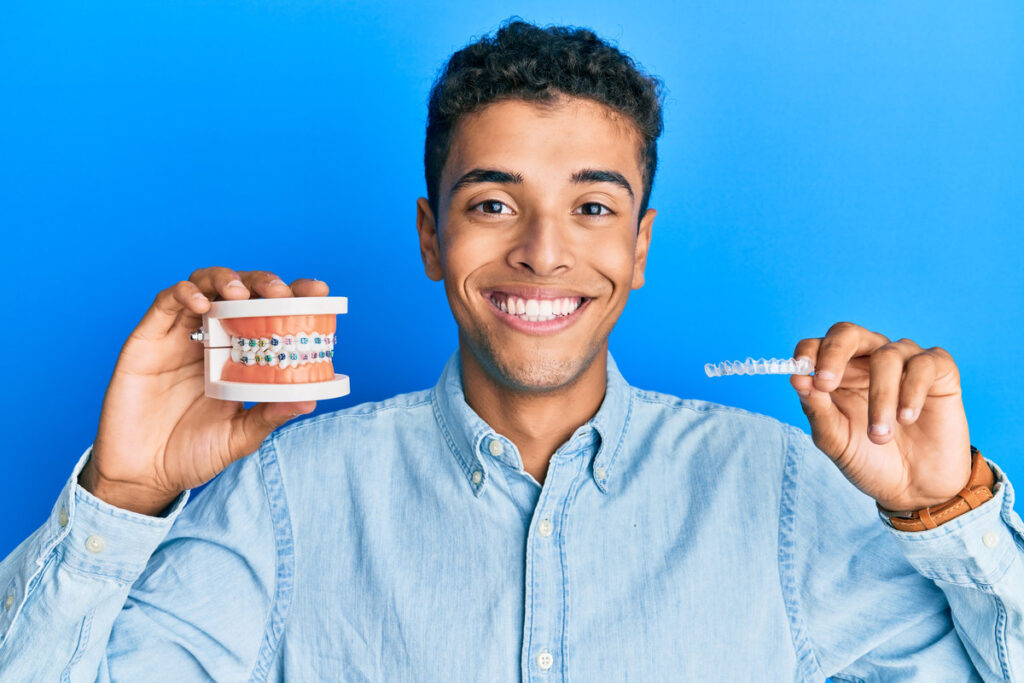
Choosing between Invisalign and traditional braces as an adult is not as simple as picking the more popular option, it is a decision that hinges on your bite complexity, lifestyle, and long-term goals for your smile. Both treatments move teeth through consistent, controlled pressure, yet the day-to-day experience of living with each one can be quite different. If you have been weighing your options and wondering which path will get you to a straighter, healthier smile with the least disruption to your daily life, the comparison is worth working through together.
At Lifetime Smiles, Dr. Michael Beke and our team take an evidence-based approach to every treatment recommendation, including orthodontics. Backed by over 35 years of practice history and Dr. Beke’s Academy of General Dentistry Fellowship, we offer both Invisalign clear aligners and traditional braces for adults, and we take the time to genuinely explain why one may be better suited for your specific situation. If you are also curious about everything else we can do to help you love your smile, our cosmetic dentistry in Bellevue services offer a wide range of options to get you there.
Appearance and Lifestyle Fit
For many adults, the first question when it comes to orthodontics is a simple one: will people be able to tell? Traditional braces use metal brackets bonded to the teeth and connected by wires, which are effective but visible. Invisalign uses a series of clear, custom-molded plastic trays that fit snugly over the teeth and are nearly invisible in everyday settings. This makes Invisalign a popular choice among working professionals and adults who prefer to keep their treatment low-key.
Beyond appearance, the removability of Invisalign aligners is a lifestyle perk that fixed braces cannot match. You can take aligners out for meals, which means no dietary restrictions and no navigating floss picks around brackets and wires. That said, this flexibility comes with real responsibility, aligners need to be worn 20 to 22 hours per day to stay on schedule. If consistency with wear time feels like it could be a challenge, traditional braces take that variable off the table entirely, working around the clock without any effort on your part.
Treatment Effectiveness and Case Complexity
When it comes to results, both options can do a wonderful job of straightening teeth, but they each have strengths worth knowing about before you decide.
What Invisalign Does Well
Invisalign has advanced significantly over the years and can now treat a broad range of alignment issues, including mild to moderate crowding, spacing, overbite, and underbite. For adults with relatively straightforward cases, clear aligners can achieve results comparable to traditional braces. Published research highlights Invisalign as a more discreet option for adults with mild to moderate malocclusion, while also noting its limitations for more complex bite issues.
Where Traditional Braces Have the Edge
Traditional braces give your dentist more precise control over tooth movement, particularly in cases involving significant rotation, vertical shifts, or complex bite correction. Because brackets and wires apply continuous, multidirectional force, they tend to be the better fit for severe crowding, large gaps, or more intricate alignment challenges. If your case falls into this territory, braces may deliver more predictable results, and sometimes in a shorter overall timeframe.
Here is a quick look at how the two options compare across some of the most common considerations:
- Visibility: Invisalign is nearly invisible; traditional braces use metal brackets and wires
- Removability: Invisalign can be removed for eating and cleaning; braces are fixed throughout treatment
- Case range: Braces address mild to severe issues; Invisalign is best for mild to moderate cases
- Oral hygiene: Invisalign is easier to keep clean; braces require a more detailed cleaning routine
- Compliance: Braces require no compliance effort; Invisalign depends on consistent daily wear
Whichever path you choose, a straighter smile is well within reach, and for many adults, orthodontic treatment is just one piece of a bigger picture. Complementary options like a smile makeover or porcelain veneers can add the finishing touches once your alignment is complete.
Cost and Treatment Timeline
Cost is a practical consideration, and the good news is that both options tend to fall within a similar price range, though the specifics depend on case complexity and treatment duration. Many dental insurance plans that include orthodontic benefits may cover a portion of either treatment, and flexible financing options like CareCredit make both more accessible for most budgets.
As for how long treatment takes, that depends far more on the complexity of your case than the type of appliance. Milder cases with Invisalign may wrap up in as few as 6 to 12 months, while more involved cases with traditional braces can extend to 18 to 30 months. The most accurate timeline will always come from a clinical evaluation with your dentist.
Start Your Smile Journey at Lifetime Smiles
The best way to figure out which orthodontic option is right for you is through a thorough, no-pressure consultation with a dentist who takes the time to look at the full picture. Dr. Michael Beke brings a depth of clinical experience, a commitment to evidence-based care, and a genuine passion for helping patients feel confident in their decisions. From his Fellowship with the Academy of General Dentistry to his background managing complex dental cases during his service with the 82nd Airborne Division, Dr. Beke’s training runs deep, and it shows in the care he provides every day.
Whether you are leaning toward Invisalign or want to explore whether traditional braces may serve you better, our team is here to walk you through every option with clarity and warmth. We accept Delta Dental PPO, Premera, Regence, and offer financing through CareCredit, so cost should never stand between you and a smile you love. Contact our office today to schedule your consultation and take that first step toward a straighter, more confident smile.